Art and the Critical Medical Humanities
Edited by Fiona Johnstone, Allison Morehead and Imogen Wiltshire, the book is Open Access.
My film, As You Were (2024) features in two essay in the new volume, Art and the Critical Medical Humanities published by Bloomsbury.
Dr Camilla Mørk Røstvik has written an essay about As You Were, titled, ‘Birth knowledge and institutional experiences: Lyndsay Mann’s As You Were’.
Read more in my next blog post here:
In addition, ‘As You Were’ is presented in the epilogue of Dr Jessica Dandona’s chapter titled, In living colour: realism and abstraction in anatomical models of the female reproductive body, 1880–1900. Excerpt:
“In contrast, in her film As You Were (2024), Scottish filmmaker Lyndsay Mann revisits the histories of pregnancy and childbirth and their impact on the lives of contemporary women through a dematerialization of the maternal body. By layering the voices of mothers over a series of evocative images which allude indirectly to maternal labour, including a spider spinning its web and a woman’s rowing team moving in unison, Mann allows for a multiplicity of perspectives. Those she interviews – new mothers who are also midwives and obstetricians – are cast not as universal anatomical subjects or idealized maternal figures, but multiply situated individuals with shifting, evolving identities. As their voices weave in and through the film’s immersive flow, we see motherhood itself as a process of becoming. In place of the absent maternal body, viewers are presented with a series of historical obstetrical instruments such as forceps, which become a stand-in for the bodies they were designed to treat. Although these objects provoke associations with pain both institutional and personal, Mann gently cradles them in her hands, suggesting the potential for healing through acts of care and remembrance. In this lyrical meditation on the act of giving birth, motherhood is no longer reduced to a physical or biological state but is instead cast as a powerful moment of transformation. In this way, the consequences of an anatomical aesthetic that conflates female identity with reproduction, privileges invasive methods of bodily exploration, and normalizes a view of the pregnant and parturient body as inherently passive are made clear, even as Mann’s film restores complexity and indeterminacy to our shared understanding of ‘motherhood’.”
In living colour: realism and abstraction in anatomical models of the female reproductive body, 1880–1900, Jessica M Dandona.
Read Jessica’s full text here:
Jessica is Professor of Liberal Arts at Minneapolis College of Art and Design. Specializing in 19th-century art and visual culture, she teaches courses on modernism, gender, curation and conservation, imperialism, and the body. Jessica’s current book project, supported by a US-UK Fulbright Scholar fellowship at the University of Dundee (Scotland), looks at the visual culture of medicine at the end of the 19th century.
I am so grateful to Jessica for her beautiful words about my work and for situating my film within the rich context of her broader research.
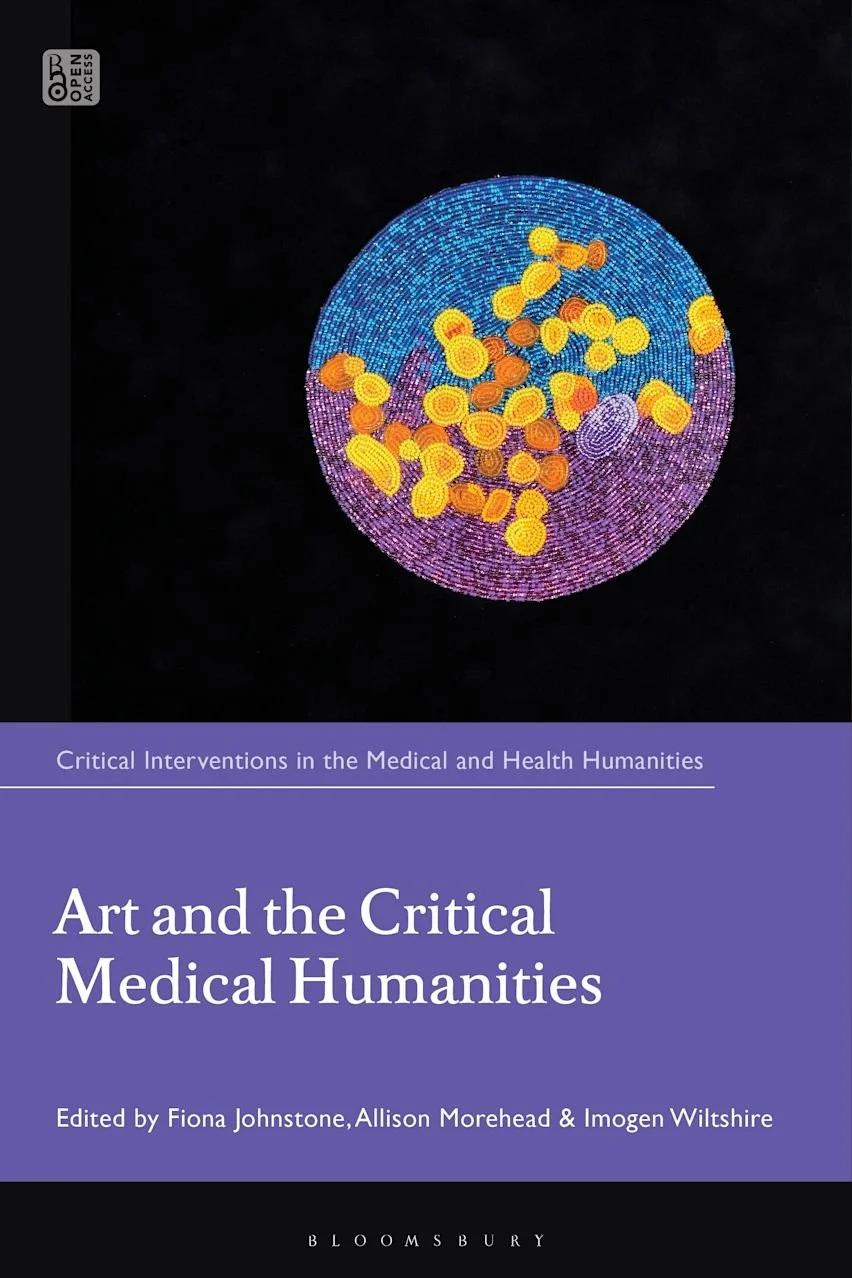
Book Description:
This agenda-setting edited volume makes a forceful case for the contribution that art – its practices and its histories – can make to debates and developments in critical medical humanities today.
Whilst medical humanities previously emphasised an instrumental attitude towards art and art-making, recent work has opened up a dynamic space in which art can critically and imaginatively operate. With urgent attention paid to constructions of race, gender, class, sexuality and disability, the artists, art historians, and scholars in related fields represented within this volume address new and pressing questions about structures and experiences of health, medical knowledge, care, therapy, and clinical research and education.
With more than 40 contributors from a range of countries including the UK, Canada, the United States, Australia, Norway, Spain, and Germany, this landmark and multi-format collection addresses artworks from the sixteenth century to the present day, serving as a key reference point for researchers, practitioners, and educators working in medical humanities and art-aligned fields alike.